Does a polished pitch earn an investor's trust?
Not in our experience. Years before Cardinal Oak, John built software products during a long career in technology, and one deal taught him something that still shapes how we work with investors today: people aren't buying your product, or your deal. They're buying whether you'll show up when something breaks.
What happened with that early software deal?
John had a product built for the PC and a shot at a large customer, a regional electric utility. They tested it for weeks, looked at competitors too, and eventually picked him. But there was a real problem. Their computers weren't what his software was built for. He told them so, plainly, and made a commitment anyway: he'd make it run, and they wouldn't owe him anything until it did.
What did that commitment actually cost?
More than he expected. He camped out at their office with a borrowed desk and monitor, still serving his other customers at the same time, and had it running in a couple of weeks. Then a networking problem showed up that he couldn't have anticipated and didn't have the skills to solve alone. It would have ended the deal if it went unresolved.
What do you do when you hit a wall outside your own skillset?
You ask for help and you don't stop asking. John went to his own network, found someone who could diagnose the issue for a few hundred dollars, and paid it without hesitating because he was already fully committed. The fix solved the customer's network problem, not just his software's problem, and it was likely affecting other parts of their operation too.
Why did that moment matter more than the product itself?
Because the customer wasn't deciding whether his software was good. They were deciding whether he'd stay committed when things went wrong. That became a long relationship: more licenses purchased over time, and a point of contact who's still a friend today. Nobody asked for a team roster or a list of credentials. They wanted to know if he'd persist.
How does this apply to investing in an apartment deal?
The same question sits underneath every investor relationship we have. An investor isn't only asking whether our underwriting numbers look right. They're asking whether we'll tell them honestly when a property hits a problem, and whether we'll stay in it and work the problem rather than disappear. That's why we report monthly, including what went wrong, not just what went right, and why our own capital sits in every deal on the same terms as our investors.
What should a prospective investor actually look for?
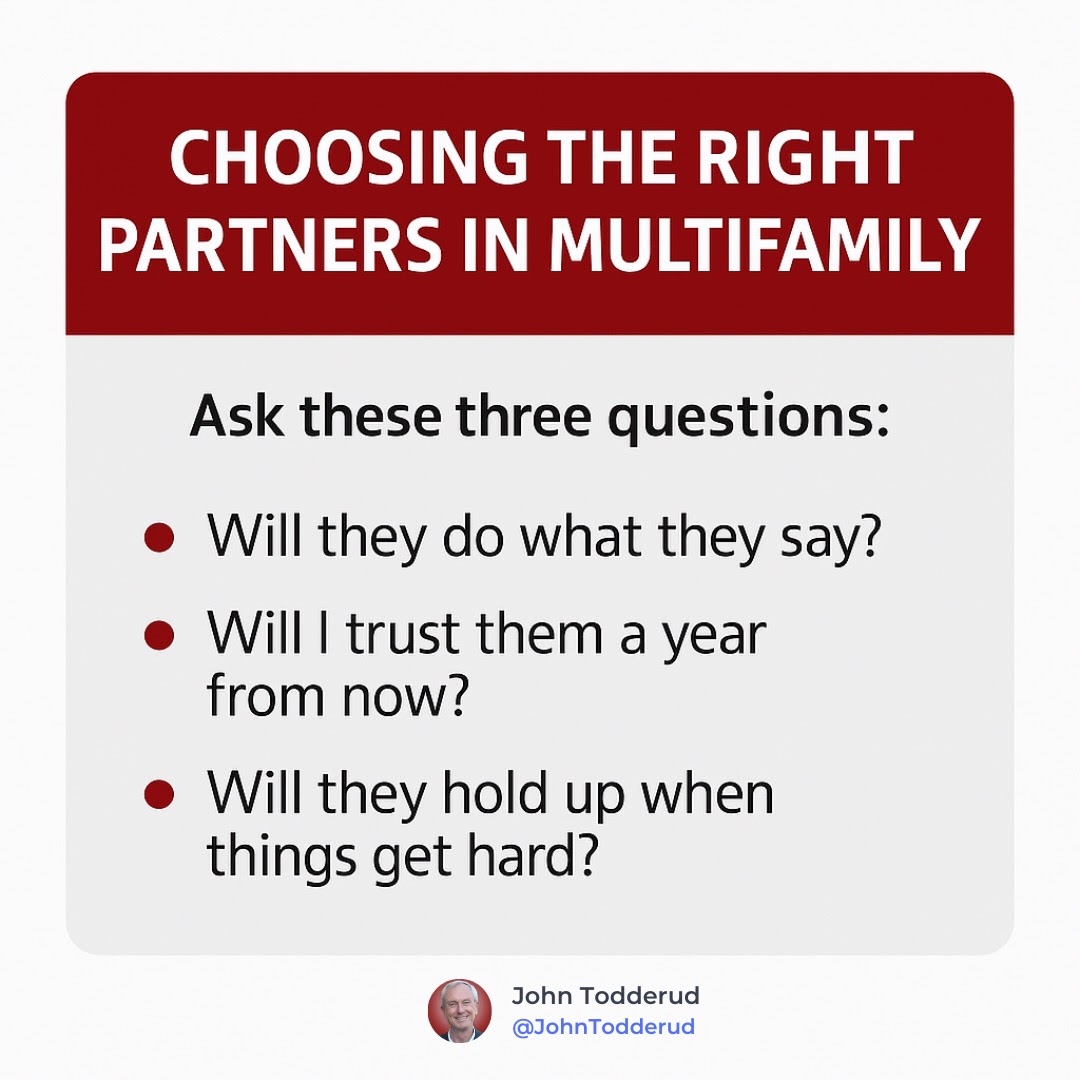
Look past the pitch. Ask a sponsor what happened on their worst deal, not just their best one, and listen for whether they answer plainly. Ask whether they put their own money in alongside yours. Those answers tell you more about whether you can trust them with your capital than any set of projected returns ever will.
What would you want to know about a sponsor's commitment before you trusted them with your money? Schedule a call with John and ask him directly.