Isn't a bigger team always safer?
Not necessarily. Bigger isn't the same as more accountable.
John spent his early career building software for companies that managed maintenance at hospitals and other large buildings. Before he was hired at one small software company, a hospital in California bought the software and it didn't work. They gave the company a short window to fix it or walk away. John flew out, sat next to the customer, and worked through every scenario until it ran right. That's what got the account back.
A few years later, after that employer folded, John built his own version of the software. He became the only salesperson because there was no one else to do it. The old contact at the hospital had since left for a new job, and when he turned up again, it was to say his new employer needed the software too. He didn't call because he trusted a big team behind John. He called because he'd watched John work and knew there was nothing he wouldn't do to make it right.
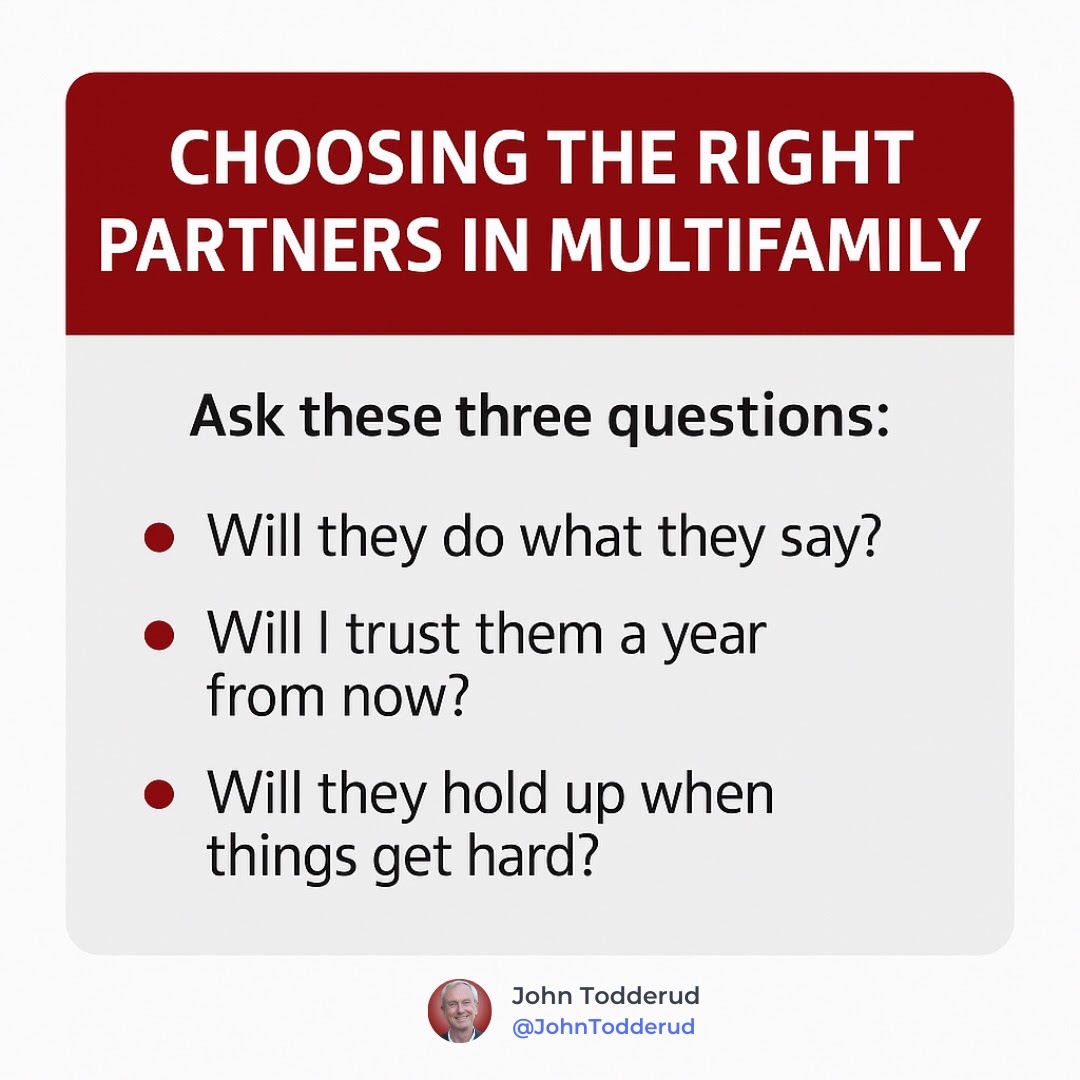
So what should I actually be asking a sponsor?
Whether they'll treat your investment like it's their only customer.
We hear the same caution often: investing with a small operator is risky, because if that one person leaves, who's left to turn to? It's a fair question. A single point of failure is a real risk in any business, including ours. But the deeper question isn't team size. It's whether the person bringing you the deal has proven, over years, that they'll show up when something goes wrong.
Ask a sponsor how they've handled a problem before. Ask who answers the phone when a water heater fails or a lease needs fixing. Ask what happens to your reporting and your distributions if the sponsor is out sick for a month. The answer matters more than the org chart.
What does that look like in practice?
It looks like someone who answers, not someone who delegates the hard calls.
John's hospital customer stayed with him for years after that first crisis. He gave tours of the property to anyone who called asking about the software. There were problems along the way, but none of them became a crisis, because he had confidence that John would handle it. That confidence wasn't built from a slide deck. It was built from being sat next to, having calls returned, and getting straight answers.
At Cardinal Oak, we put our own capital into every deal we sponsor, on the same terms as our investors. Same waterfall, same timing, same risk. We also manage the repositioning work ourselves rather than handing it off, so when something breaks, our team is the one responding.
Isn't it true that when everyone is accountable, no one is accountable?
That's the worry behind the "small shop" objection, and it's worth taking seriously.
A large team can spread responsibility until no single person owns the outcome. A small, proven operator has nowhere to hide. That cuts both ways. If the one person at the center of a small shop hasn't been tested, that's a real risk. If they have, years of handling problems without turning them into crises, it can be a strength.
We think the honest answer is to ask for evidence either way. What's the sponsor's track record with problems, not just with successes? Who have they stuck with when things got hard? Those answers tell you more than headcount does.
What's the real question to ask before you invest?
Not "how big is the team," but "how will you prove you'll treat my investment like it's your only one."
We report monthly on our properties, including what went wrong, not just what went right. We think that kind of transparency, sustained over time, is a better test of trust than team size alone. It won't tell you everything, and we'd rather you ask hard questions than take our word for it.
What would you want to see from a sponsor before trusting them with your capital? If you'd like to talk it through, schedule a call with John.